Ask any Scottish athlete heading into the 2026 Commonwealth Games in Glasgow what they think about competing in front of a home crowd, and you'll likely hear some version of the same sentence: "It's going to be amazing having my family there." The assumption sitting underneath that sentence is almost universal. home support equals an automatic psychological boost. Family in the stands, a nation cheering your name, the venue you grew up watching on television now hosting you as the main event, and what's not to love.
Here's the problem. That assumption is only true for certain athletes, some of the time. For others, the exact same scenario. mum and dad in row twelve, a roaring Scottish crowd, the weight of "home-nation pride", is closer to a psychological liability than a gift. The difference isn't talent, experience, or even mental toughness in the generic sense. It's personality architecture. And if Scottish athletes walk into Glasgow 2026 believing home advantage is a one-size-fits-all blessing, a lot of them are going to be blindsided by how it actually lands.
The Myth: Home Crowds Are an Unqualified Advantage
The myth goes like this: competing at home, in front of family, with a nation's crowd behind you, is pure rocket fuel. Commentators reinforce it constantly - "the home crowd will lift them," "there's nothing like performing in front of your own people." Sport federations lean into it too, using "home advantage" as a recruitment and funding narrative. It's a tidy story, and tidy stories spread.
Part of why this belief sticks is that it's true often enough to feel like a universal law. Statistically, home advantage is a real phenomenon across many sports, host nations frequently outperform their historical medal averages. Glasgow already proved this in 2014, when Scotland posted its best-ever Commonwealth Games medal haul on home soil. That data point gets repeated endlessly, and understandably so. It's a compelling headline.
But statistical home advantage at the team or nation level is not the same thing as guaranteed individual psychological benefit. A country can rack up more medals at home while several of its individual athletes are privately struggling under exactly the kind of pressure that supposedly helped them. The myth collapses the group-level trend into a personal guarantee, and that's where it starts misleading athletes who don't fit the pattern.
The Reality: Home Pressure Is Personality-Dependent, Not Universal
The reality is messier and more useful. Home crowd pressure doesn't act on athletes uniformly, it interacts with how each individual is wired to process competition, source motivation, and relate to an audience. A few athletes genuinely do get a measurable lift from a home crowd. Others experience the identical stimulus as attentional noise that actively degrades performance.
This tracks with decades of research on attention and pressure. Sian Beilock's work on choking under pressure shows that performance breakdowns often happen when heightened self-consciousness pulls attention away from the automatic, well-rehearsed execution of skill and toward explicit, step-by-step monitoring - the classic "paralysis by analysis" that a packed, emotionally charged home crowd can trigger in certain athletes far more than a neutral away crowd would. Meanwhile, Edward Deci and Richard Ryan's self-determination theory helps explain why a few athletes thrive on exactly that same external attention: when the crowd's presence is interpreted as validating and connected rather than evaluative and threatening, it can support rather than undermine performance. The crowd itself doesn't determine the outcome - the athlete's interpretation of the crowd does.
In my own years competing in endurance events, I noticed this split long before I had language for it. Racing a half-marathon on home roads with clubmates and family scattered along the course felt entirely different depending on my headspace that year. In seasons where I was chasing a personal time goal, the crowd noise barely registered, I was locked into pace and breathing. In seasons where I cared more about beating specific rivals in front of people who mattered to me, that same crowd became rocket fuel. Same course, same faces, opposite psychological effect. That inconsistency isn't a flaw in athletes; it's a signal about what's actually driving their motivation and attention at any given moment.
The myth persists because "home advantage helps everyone" is a simpler story than "home advantage helps certain athletes and actively hurts others, depending on how they're psychologically built." Coaches and federations rarely have the bandwidth to individualize pressure management advice for every athlete, so the blanket narrative survives. even though it sets up a meaningful minority of Scottish athletes for a rude surprise in Glasgow.
Why This Matters for Different Personality Types
According to the SportPersonalities Four Pillars framework, the way an athlete experiences home crowd pressure depends heavily on two dimensions in particular: whether their motivation is intrinsic or extrinsic, and whether their competitive focus is self-referenced or other-referenced. Add in the collaborative-versus-autonomous social dimension, and you get sharply different experiences from athletes standing on the exact same start line.
Take  The Superstar (EORC). This sport profile is extrinsically motivated, other-referenced, and collaborative, they draw energy from recognition and from performing within a team context. A Superstar competing in gymnastics or track relay for Scotland at Glasgow 2026 is likely to describe the home crowd as the single best part of the entire Games. The louder the arena, the more locked-in they become. Their nervous system reads "10,000 people screaming my name" as fuel, not threat.
Now consider  The Purist (ISTA), intrinsic, self-referenced, tactical, and autonomous. A Purist competing in an individual sport like cycling time trials or artistic swimming isn't chasing the crowd's approval; they're chasing their own technical execution. For this sport profile, family in the stands and a home crowd's emotional intensity can register as noise that pulls focus away from the internal checklist they rely on. A Purist judoka who trained for years in relatively quiet gyms may find the sensory overload of a home Commonwealth Games crowd genuinely disorienting, not inspiring.
The Record-Breaker (ESTA) sits in an interesting middle zone, extrinsic and self-referenced, tactical and autonomous. They want the external validation of a home crowd witnessing their achievement, but they're measuring success against their own personal bests and systematic preparation, not the crowd's emotional temperature. A Record-Breaker swimmer might use the home crowd as evidence that their hard work is being seen, without needing the crowd to generate their intensity in the first place.
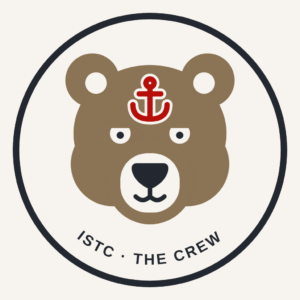
Meanwhile,  The Anchor (ISTC), intrinsic, self-referenced, tactical, and collaborative, experiences home pressure almost entirely through the lens of team responsibility rather than personal spotlight. An Anchor on a Scottish curling or relay squad might feel the home-nation pressure as an obligation to not let teammates down in front of a home crowd, which is a fundamentally different psychological load than the Superstar's excitement or the Purist's distraction.
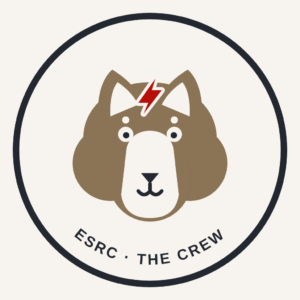
Finally,  The Daredevil (ESRA). extrinsic, self-referenced, reactive, and autonomous. often reports the most volatile relationship with home crowds. Because Daredevils genuinely can access peak performance under pressure, a roaring home crowd can produce a career-best moment. But because their intensity is so reactive to the environment, an off night with a flat or overly tense crowd atmosphere can produce the opposite extreme. There's no steady baseline; the crowd amplifies whatever direction the moment is already heading.
Think about two Scottish athletes in the same sport, say, badminton, walking into the Emirates Arena for Glasgow 2026. One is a Superstar, feeding off the roar during a tense third set. The other is a Purist, deliberately tuning out the crowd and narrating technical cues to themselves between points. Both can win. Both can lose. But the mental preparation that gets each of them to their best performance looks almost nothing alike, despite identical external conditions.
Discover Your Sport Personality
This article explores one of 16 profiles. Find out which one you are and unlock a personalized blueprint for your athletic journey.
Take the Free TestWhat to Do With This Knowledge
The practical shift here is straightforward but frequently skipped: stop preparing for "the pressure of a home Games" as a generic threat and start preparing for how your specific psychology will interpret that pressure.
- If you lean Other-Referenced and Extrinsic (Superstar, Gladiator, Record-Breaker types): Lean into the crowd deliberately. Visualize the noise as part of your pre-competition routine rather than something to tolerate. Ask family and friends to sit in visible spots you can glance toward between routines or races, for you, that visual anchor is a performance asset, not a distraction.
- If you lean Self-Referenced and Intrinsic (Purist, Flow-Seeker types): Build a deliberate attentional narrowing routine. Many elite individual-sport competitors use pre-performance rituals, a fixed sequence of breathing, self-talk cues, or physical routines, specifically to shrink their attentional field before the environment can hijack it. Practice this in loud training environments beforehand so it's automatic, not improvised, on the day.
- If you lean Collaborative (Anchor, Motivator, Harmonizer types): Reframe the home crowd's presence around teammates rather than yourself individually. Team debriefs before competition that explicitly name "we're doing this for each other, the crowd is a backdrop" can reduce the personalized weight of home-nation expectation.
- If you lean Reactive (Daredevil, Maverick, Playmaker types): Since your intensity is environmentally responsive, build in a physical "temperature check" - a specific warm-up marker that tells you whether you're running hot or flat that day. so you can consciously adjust rather than let the crowd's mood dictate yours by default.
Coaches working with Scottish squads heading into 2026 would do well to run a simple personality mapping exercise across their roster before assuming a single pre-competition talk about "embracing the home crowd" will land the same way for everyone in the room, and it won't.
The Bigger Picture
The home-crowd-as-universal-boost myth is a specific case of a much larger pattern in sport psychology: the tendency to treat competitive pressure as a single, uniform force rather than a variable that gets filtered through individual psychological architecture before it produces any effect at all. Dan Gould's research on pressure at major Games has long pointed toward this, the same objective stressor produces wildly different subjective experiences and performance outcomes depending on the athlete's interpretive framework, not the stressor's intensity alone.
This is exactly why generic "just enjoy the moment" or "use the crowd's energy" advice, however well-intentioned, fails a meaningful percentage of athletes every single Games cycle. It's less about the advice is wrong. It's because it's incomplete. built for one personality profile and handed to everyone.
None of this means Scottish athletes should fear Glasgow 2026 or assume home advantage is a myth in the dismissive sense. The data on host-nation performance gains is real. What's not real is the assumption that every individual athlete inside that statistic experiences the mechanism the same way. Some will be carried by the crowd. Others will need to actively manage around it. Both outcomes can still end in a medal, but only if the athlete and their support team understand which category they're actually in before they ever step onto the field, mat, or pool deck in front of a home crowd that will, without question, be loud.
This content is for educational purposes, drawing on sport psychology research and professional experience. I hold an M.A. in Social Psychology, an ISSA Elite Trainer and Nutrition certification, and completed professional training in Sport Psychology for Athlete Development through the Barcelona Innovation Hub. I am not a licensed clinical psychologist or medical doctor. Individual results may vary. For clinical or medical concerns, please consult a licensed healthcare professional.
Continue Reading